


Shop Mulch
Learn






Waukesha County & SE Wisconsin
Mulch Weight Guide: How Much a Yard, Bag, and Pallet of Mulch Weigh
A yard of wood mulch weighs 400 to 800 pounds dry, and over 1,000 after rain. A standard bag runs 20 to 40 pounds. A full pallet can top 2,000. Read our guide below to know what those numbers mean before you load up your truck.

Most people do not think about how much mulch weighs until they are halfway through loading a pickup truck and something feels off. Or they get home and realize three bags per trip is all their back will allow.
Mulch weight matters more than most people expect. It affects how many bags you can haul in one trip, whether your truck is safe to load, and whether a custom bulk delivery makes more sense than multiple store runs. This guide covers all three: how much a yard weighs, how much a bag weighs, and what a full pallet actually tips the scales at. Each one has its own dedicated post going deeper if you need it, but if you just want the quick answer, it is all here.
How Much Does a Yard of Mulch Weigh?
A cubic yard of wood mulch typically weighs somewhere between 400 and 800 pounds when dry. After rain, or if it was freshly processed, that same yard can push past 1,000 pounds.
The range is wide because mulch is not one thing. Cedar is lighter than hardwood. Rubber is heavier than both. And moisture changes everything: a rained-on load of shredded hardwood can weigh 30 to 50 percent more than the same material bone dry.
Here is a quick reference by mulch type:
| Mulch Type | Dry (lbs/yard) | Wet (lbs/yard) |
|---|---|---|
| Shredded hardwood | 500–700 | 800–1,000+ |
| Cedar mulch | 400–600 | 700–900 |
| Pine bark nuggets | 350–500 | 600–800 |
| Rubber mulch | 800–1,200 | 800–1,200 |
| Compost / leaf mulch | 600–1,000 | 1,000–1,400+ |
| Straw mulch | 350–500 | 900–1,400+ |

A couple of things worth noting: rubber mulch is the one type that does not change with moisture. It weighs the same wet or dry. And straw is the biggest wild card. Light as a feather when dry, it soaks up water like a sponge and can more than double in weight after a heavy rain.
For most homeowners ordering hardwood bulk mulch delivery (the most common type), plan on roughly 600 pounds per yard as a working estimate when conditions are normal.
For the full dry vs. wet breakdown by material, see our dedicated guide: how much does a yard of mulch weigh?
How Much Does a Bag of Mulch Weigh?
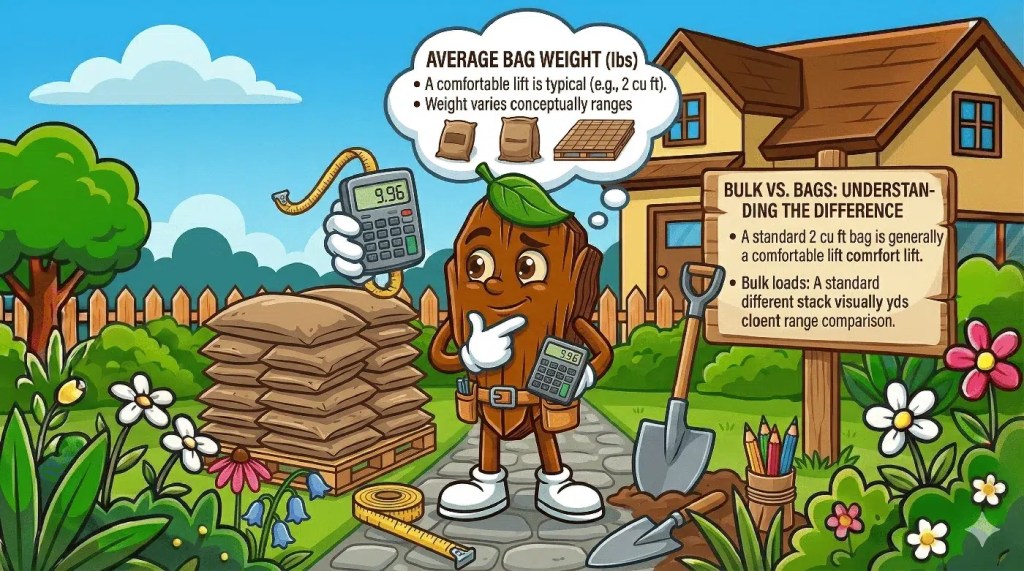
Bag weight depends on two things: the size of the bag and what is in it. The standard bag at most home improvement stores is 2 cubic feet. Home Depot's Earthgro brand uses 1.5 cubic foot bags during their spring sale: same price, less mulch, lighter bag.
Here is what to expect by bag size:
| Bag Size | Wood Mulch (lbs) | Rubber Mulch (lbs) |
|---|---|---|
| 1.5 cu ft | 15–30 | 35–55 |
| 2 cu ft | 20–40 | 40–65 |
| 3 cu ft | 30–55 | 60–90 |
The wood mulch weights above assume a reasonably dry bag. A wet bag off a pallet that sat outside through a rainstorm can run 10 to 15 pounds heavier than those estimates. If you have ever grabbed what you thought was a light bag and nearly dropped it, that is why.
For more on bag sizes and how the 1.5 cu ft vs 2 cu ft difference affects the value of the spring mulch sale, see our 5-for-$10 mulch sale breakdown. And if you are trying to figure out how many bags equal a yard, we have the conversion table at how many bags are in a yard of mulch.
We have a full bag weight guide in the works that covers every common bag size and brand in more detail, including what to expect from a wet bag versus a dry one off the shelf.
How Many Bags Are on a Pallet, and How Much Does the Pallet Weigh?
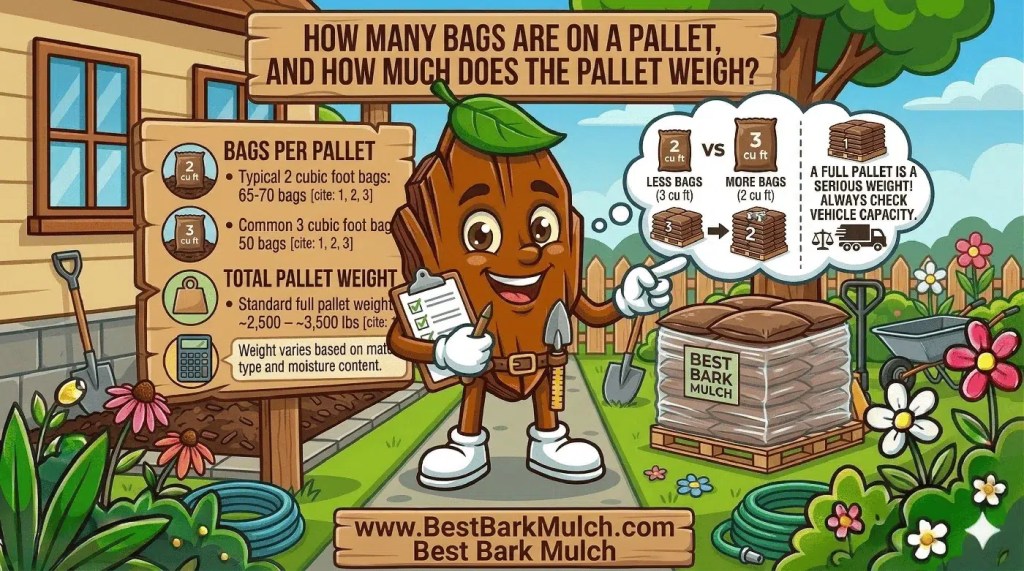
A standard pallet of mulch at Home Depot or Lowe's holds somewhere between 60 and 75 bags depending on bag size and how they are stacked. The wrapped pallets you see in the garden center are usually stacked to about 60 inches high (roughly chest height), which is about as tall as they can safely go.
| Store / Brand | Bag Size | Bags per Pallet | Approx. Pallet Weight |
|---|---|---|---|
| Home Depot (Earthgro) | 1.5 cu ft | 65–75 | 1,300–1,900 lbs |
| Lowe's (Sta-Green) | 2 cu ft | 60–70 | 1,500–2,100 lbs |
| General range (wood) | 2 cu ft | 40–80 | 1,000–2,400 lbs |
The takeaway here: a full pallet of mulch is heavy. A standard half-ton pickup truck has a payload rating somewhere between 1,000 and 2,000 pounds. Depending on your specific truck and how wet the bags are, the weight of a full pallet of bagged mulch can be at or over that limit. This is not a reason to panic, but it is worth knowing before you ask the garden center to load a whole pallet onto your truck bed.
For a full look at how bags and bulk compare cost-wise, see our bagged mulch guide.
If you are planning to pick up a full pallet and want more detail on counts, weights, and what to expect from each store, we have a dedicated pallet guide coming that covers it all.
How Much Can Your Truck Actually Haul?

This is the question that matters most before you load up. Mulch looks light (it is fluffy, it is wood), but a few yards of it adds up fast, especially if it has been sitting in the rain.
Your truck's payload rating is on a sticker inside the driver's door jamb. That number is the total weight your truck bed can safely carry, including everything in it. Here is how typical mulch orders stack up against common vehicle limits:
| Order Size | Dry Weight Range | Wet Weight Range | Verdict |
|---|---|---|---|
| 1 yard | 400–700 lbs | 700–1,000 lbs | Fine for a full-size truck. Check sticker if mulch is wet. |
| 2 yards | 800–1,400 lbs | 1,400–2,000 lbs | Full-size: borderline. Mid-size: likely over limit. |
| 3 yards | 1,200–2,100 lbs | 2,100–3,000 lbs | Exceeds most half-ton ratings. Plan for multiple trips. |
| 4+ yards | 1,600–3,200+ lbs | 2,800–4,800+ lbs | Delivery is the practical choice at this volume. |
A full-size pickup (F-150, Silverado, Ram 1500) holds about 2 to 2.5 yards of mulch when loaded level with the bedrail. A mid-size truck like a Tacoma or Colorado is more like 1.5 to 2 yards. Going above those amounts means either a second trip or switching to a dump trailer if you have one.
For a full breakdown of what makes sense by order size, including time, trips, and total cost, see our mulch delivery vs pickup guide.
When the Weight Math Points to Delivery
Once you are ordering 3 yards or more, the weight logistics start to add up fast: multiple trips, payload concerns, mulch residue in the truck bed, and a few hours of your weekend gone. Bulk delivery sidesteps all of it. The truck shows up, drops the pile where you want it, and leaves. No payload math, no store runs, no cleanup.
If you are in southeastern Wisconsin and want to skip the hauling entirely, browse our mulch delivery options here. We deliver across Waukesha County and SE Wisconsin with a 4-yard minimum, and our installation add-on means the mulch gets spread for you too if you want to skip that part as well.
Not sure how many yards your project needs? Start by learning how to measure for mulch, then plug your square footage into our Mulch Calculator to get your yard total.
Frequently Asked Questions
How much does a yard of mulch weigh?
A cubic yard of wood mulch typically weighs between 400 and 800 pounds when dry. After rain or if it was freshly processed, that same yard can weigh over 1,000 pounds. Rubber mulch runs heavier (800 to 1,200 pounds) and does not change with moisture. For most hardwood mulch orders, 600 pounds per yard is a reasonable working estimate.
How much does a 2 cubic foot bag of mulch weigh?
A standard 2 cubic foot bag of wood mulch weighs between 20 and 40 pounds when dry. A wet bag off a pallet that has been sitting outside can run closer to 45 to 50 pounds. Rubber mulch bags at the same size run heavier, typically 40 to 65 pounds.
How many bags of mulch are on a pallet?
Most pallets at Home Depot and Lowe's hold between 60 and 75 bags, depending on bag size. Home Depot's 1.5 cubic foot Earthgro bags typically stack 65 to 75 per pallet. Lowe's 2 cubic foot Sta-Green bags come in around 60 to 70 per pallet. The total pallet weight can range from 1,300 to over 2,000 pounds, often at or above a half-ton truck's payload rating.
Can a pickup truck haul a yard of mulch?
Yes, in most cases. A full-size pickup handles a single yard of dry wood mulch without issue. It falls well within typical payload ratings. The situation gets tighter with wet mulch, which can push a yard past 1,000 pounds. Always check your truck's payload sticker inside the driver's door jamb before loading, especially if conditions have been wet.


Related Blog Posts
Transform Your Landscape with Premium Mulch – Sign Up for Exclusive Deals & Tips!
Revitalize Your Landscape Today!

mulchDelivery To following Cities
Wisconsin
and Waukesha County
mulch delivery in South Eastern
Wisconsin and Waukesha County
