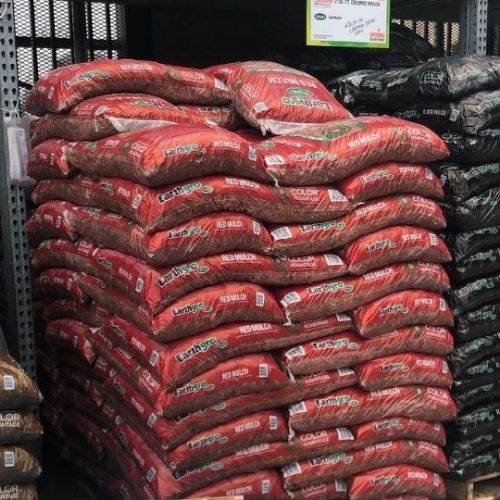
mulch calculator, topsoil calculator, bagged mulch calculator

Although our yard is based in Pewaukee, Wisconsin, our mulch delivery service covers all of southeastern Wisconsin. Whether you’re in the city of Milwaukee or in the suburbs of Oconomowoc, we’ve got you covered!

How Much Mulch Do You Need?

Planning your next landscaping project and wondering, "How much mulch do I need?" You’re not alone! Calculating the right amount of mulch ensures your garden, flower beds, or landscaping areas look great and stay healthy. Follow these simple steps to determine how much mulch you’ll need, or use our easy-to-use Mulch Calculator below.
Step 1: Measure Your Area
Measure length and width of each area to find the total square footage.
Step 2: Decide on Your Mulch Depth
Decide on mulch depth—commonly 2–3 inches—for optimal weed control and moisture retention.
Step 3: Calculate Your Mulch Needs
Calculate cubic yards: (Area in square feet × Depth in feet) ÷ 27. Or use one of our calculators for more accurate quantities and details 
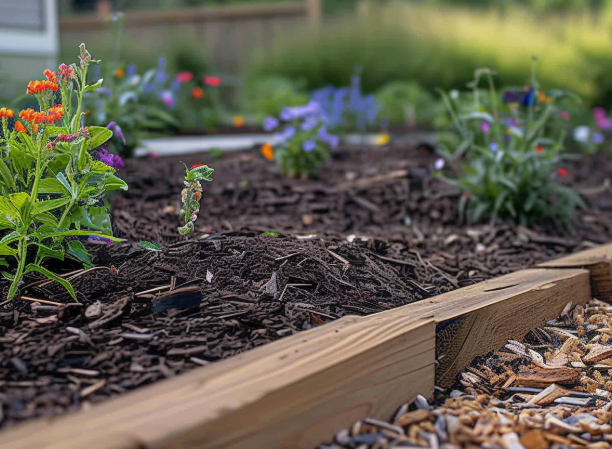
bed of mulch in garden

Use Our Mulch Calculator

Not sure how to do the math? Use our interactive Mulch Calculator! Input your area size, desired depth, and bag size to instantly find out how much mulch you need for your project.

Why the Right Amount of Mulch Matters

Applying the correct amount of mulch offers numerous benefits:

  • Weed Control: Helps suppress weeds when applied at the right depth.
  • Moisture Retention: Keeps soil hydrated by reducing evaporation.
  • Temperature Regulation: Protects roots from extreme heat and cold.
  • Erosion Prevention: Stabilizes soil in sloped or heavily trafficked areas.

FAQs About Mulch Needs

1. How do I calculate how much mulch I need?

To calculate mulch, measure the total area in square feet and multiply it by the desired depth in inches. Use this formula:
(Area × Depth ÷ 12) ÷ 27 = Total cubic yards.
For example, a 200 sq. ft. area at 3 inches deep requires about 1.85 cubic yards.

2. How deep should mulch be applied for optimal results?

The ideal depth depends on your goals:
- 2–3 inches: Best for most landscaping to retain moisture and suppress weeds.
- 4 inches: Ideal for erosion control or areas with heavy foot traffic.

3. Can mulch affect soil pH levels?

Yes, certain types of mulch can slightly alter soil pH. For example:
- Pine bark: Can lower pH, making the soil more acidic.
- Hardwood mulch: May increase alkalinity over time as it decomposes.

It’s always a good idea to monitor your soil pH periodically.

4. How long does mulch last before it needs to be replaced?

Organic mulch typically lasts about one year before it begins to break down. Replenishing mulch annually helps maintain its appearance and effectiveness in retaining moisture and controlling weeds.

5. Is it necessary to remove old mulch before adding new mulch?

In most cases, you don’t need to remove old mulch. Instead, loosen the compacted layers with a rake and add fresh mulch on top to maintain the desired depth. However, if the old mulch is moldy or excessively thick, consider removing some before applying a new layer.

These technical questions provide practical, informative answers while addressing common concerns about mulch application and maintenance. Let me know if you'd like additional details!

Order Mulch Today

Once you know how much mulch you need, we’re here to help! At Best Bark Mulch, we offer both bagged mulch and bulk mulch delivery to suit any landscaping project. Whether you’re covering a small garden or a large commercial space, our premium mulch is sourced from the best materials to ensure quality.
Order Mulch Today

How Many Bags of Mulch Do I Need?

How to calculate How Many Mulch Bags You Need

Are you planning your landscaping project and wondering how many bags of mulch you’ll need? Whether you’re buying mulch from a Lowe’s mulch sale, a Home Depot mulch sale, or a local supplier, calculating the right amount of mulch is key to saving time and money. By determining the size of your project and the mulch depth, you can find out exactly how many bags—or cubic yards—you need.
Step 1: Measure Your Area
Start by measuring each project’s length and width to find total square footage. Combine separate areas if needed for a grand total.
Step 1: Measure Your Area
Decide how deep you want your mulch, typically two to four inches, to ensure optimal weed suppression and moisture retention throughout your landscape.
Step 1: Measure Your Area
Calculate bags needed by multiplying area in square feet, dividing by 12 for depth, then dividing that total by each bag’s cubic feet.
To calculate:
(Area in square feet × Depth in inches ÷ 12) ÷ Bag size in cubic feet = Total number of bags needed

Use Our Mulch Calculator

Use our mulch calculator to find out how many bags of mulch you need for your landscaping project and see the cubic yard equivalent for Bulk mulch

ft²
inches
bags

Where to Buy Mulch: Lowe’s vs. Home Depot Sales
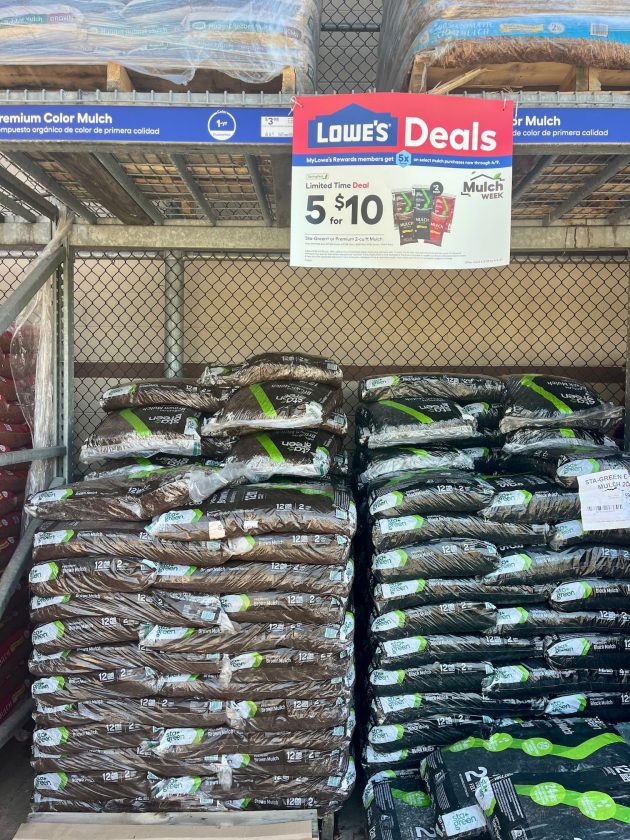
If you’re comparing options for buying mulch, check out the latest sales at Lowe’s or Home Depot:
plant on mulch

Lowe’s Mulch Sale

Known for competitive pricing on bagged mulch, including popular options like black, brown, and red mulch.
plant on mulch

Home Depot Mulch Sale

Offers bulk discounts and seasonal deals on bagged mulch in a variety of sizes and colors.
Both stores frequently have sales on bagged mulch, especially during spring and summer, so keep an eye out for discounts to save on your project.

Bagged vs. Bulk Mulch: What’s Right for You?
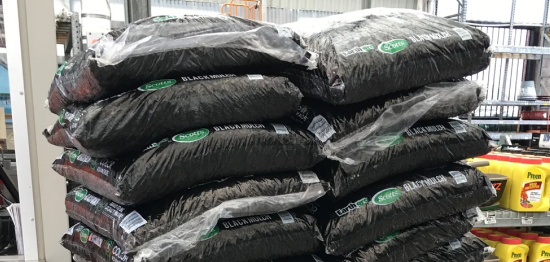
home depot and lowes bagged mulch

Bagged Mulch

Convenient for smaller areas, easy to transport, and perfect for decorative touches. Great deals can often be found during a Lowe’s mulch sale or a Home Depot mulch sale.
bulk mulch delivery

Bulk Mulch

Cost-effective for larger projects, reduces plastic waste, and is delivered directly to your location.

FAQs About Mulch Bags

1. What is mulch, and why is it important?

Mulch is a material spread over the surface of the soil to retain moisture, regulate soil temperature, suppress weeds, and improve soil health. It can also enhance the aesthetic appeal of your garden or landscape. Mulching provides a protective barrier between the soil and the elements, helping your plants thrive in various weather conditions.

2. What types of mulch are available?

Mulch can be divided into two main categories:
- Organic Mulch: Includes materials like wood chips, shredded bark, straw, grass clippings, and pine needles. These break down over time, enriching the soil with nutrients.
- Inorganic Mulch: Includes gravel, stones, and plastic sheeting. These are long-lasting and best for areas where soil enrichment isn’t a priority.

3. How much mulch do I need for my garden?

To calculate the amount of mulch you need, multiply the area (in square feet) by the desired depth (in inches), then divide by 324. This formula gives you the cubic yards needed. For example, a 200-square-foot area with 3 inches of mulch requires about 1.85 cubic yards.

4. When is the best time to apply mulch?

The ideal time to apply mulch is in mid-to-late spring after the soil has warmed up from winter. Applying mulch too early can trap cold air in the soil, which may hinder plant growth. Mulching in fall is also beneficial for protecting plants during winter.

5. How deep should mulch be applied?

A depth of 2–3 inches is ideal for most landscaping projects. This thickness is sufficient to suppress weeds and retain moisture without smothering plant roots. For areas with heavy weed growth or erosion, a 4-inch depth may be more effective.

6. Can mulch attract pests?

While mulch itself doesn’t attract pests, improper application can create habitats for insects. Avoid piling mulch against tree trunks, plant stems, or building foundations, as this can provide shelter for pests like termites and rodents. Proper application ensures mulch benefits your garden without inviting unwanted visitors.

7. Should I remove old mulch before adding new mulch?

In most cases, it’s not necessary to remove old mulch. You can simply add a fresh layer to maintain the desired depth. However, if the old mulch has compacted or developed mold, consider raking it loose or removing it before adding new mulch.

8. What is the best type of mulch for vegetable gardens?

If you call us during business hours we will get back to you within the next 30 minutes if your call is missed or all of our lines are busy. If you call us outside of business hours we will call you first thing the next morning.

If you email us/fill out the contact form during business hours we will get back to you within 30 minutes. If you email us/fill out the contact form outside of business hours we will get back to you that night, or first thing the next morning

How Many Bags of Mulch in a Cubic Yard of Mulch?

For larger landscaping projects, ordering bulk mulch is often the most practical and economical option. Use our Mulch Calculator below to find out exactly how much mulch you need.

Mulch Bag to Cubic Yard Calculator

Bags
Cubic Yards

When planning your landscaping project, understanding how many mulch bags equal a cubic yard can save you time and money. The answer depends on the size of the mulch bags. Here’s a quick breakdown:

  • 1 cubic yard = 27 cubic feet
  • Common bag sizes:
    • 1.5 cubic foot bags: 18 bags equal 1 cubic yard
    • 2 cubic foot bags: 13.5 bags equal 1 cubic yard
    • 3 cubic foot bags: 9 bags equal 1 cubic yard

Knowing these numbers helps you determine if buying bulk mulch or bagged mulch is the better choice for your project.

Bagged vs. Bulk Mulch: What’s Best for Your Project?

  • Bagged Mulch: Convenient for smaller projects, easy to transport, and available in various colors.
  • Bulk Mulch: Cost-effective for larger areas, delivered directly to your site, and reduces plastic waste.

How Many Cubic Feet in a Yard of Mulch?

What Is a Cubic Yard?
A cubic yard is a volume measurement that represents a space that is 3 feet wide, 3 feet long, and 3 feet tall. When it comes to mulch, knowing this measurement helps you determine how much material you need to cover a specific area.

  • 1 cubic yard = 27 cubic feet
  • Imagine a box that’s 3 feet on each side—that’s the size of 1 cubic yard!

How Many Square Feet Does a Yard of Mulch Cover?
The coverage of a cubic yard of mulch depends on the depth you apply it. Here’s a quick guide:

  • 1 inch deep: Covers 324 square feet
  • 2 inches deep: Covers 162 square feet
  • 3 inches deep: Covers 108 square feet
  • 4 inches deep: Covers 81 square feet

Why Knowing Cubic Feet in a Yard of Mulch Matters
Understanding this relationship helps you:

  • Plan Effectively: Avoid ordering too much or too little mulch.
  • Save Time and Money: Get exactly what you need for your project.
  • Achieve the Right Results: Apply mulch at the correct depth for weed control, moisture retention, and soil protection.

Cubic Feet to Cubic Yards Mulch Calculator

Cubic Feet
Cubic Yards

Practical Example: Calculating Mulch Needs
Imagine you’re mulching a 200-square-foot garden:
Desired mulch depth: 3 inches
Multiply area by depth: 200 × 3 = 600 cubic inches
Convert inches to cubic feet: 600 ÷ 12 = 50 cubic feet
Convert to cubic yards: 50 ÷ 27 = 1.85 cubic yards
In this case, you’ll need approximately 1.85 cubic yards of mulch.

Our Bulk Mulch Products For Sale
Online Ordering | Select Preferred Delivery Date | Simple As That

order mulch completely online - select your preferred mulch delivery date - we show up - simple as that!

On time deliveries

We know you need mulch at the perfect delivery date, because you prepared for a day of spreading!

Correct Amounts

Every mulch delivery that leaves our yard is tracked by our loading software, and inspected & confirmed by the driver with the office staff. NO MISTAKES

Reliable Communication

Available during business hours for immediate support to schedule your order, answer your questions, and offer real time support!
View all mulch products

Contact Us Today to Order Mulch

Our team is here to help! Whether you're curious about the process, pricing, or how to customize your installation, we’re ready to answer your questions and ensure your project goes smoothly. Reach out to us today!
get in touch today!
mulch services near me

mulchDelivery To following Cities

South Eastern
Wisconsin
and Waukesha County

mulch delivery in South Eastern
Wisconsin and Waukesha County

join our newsletter