Learn how many cubic feet are in a yard of mulch (27), plus simple conversions for bags, cubic yards, and mulch coverage so you order the right amount.

Picking the right amount of mulch makes a big difference—on cost, appearance, and how well your beds perform. Landscapers typically sell bulk mulch by the cubic yard, but homeowners often think in square feet or bags. This guide explains how to convert cubic yards to cubic feet, why volume matters, and how to figure out exactly how much mulch your property needs. We’ll also cover local delivery and installation options in southeastern Wisconsin and how Best Bark Mulch can help with quality products and expert service.
One cubic yard equals 27 cubic feet. That simple conversion helps you estimate material needs more accurately, so you don’t over-order (wasting money) or under-order (requiring an extra delivery). Keep that 27 number in mind when planning and budgeting for any landscaping project.
1 cubic yard = 27 cubic feet. So if you’re converting mulch from cubic yards to cubic feet, use this simple formula: Cubic feet = cubic yards × 27
Example:
Reverse conversion (if you have cubic feet and need cubic yards): Cubic yards = cubic feet ÷ 27 Example: 20 cubic feet ÷ 27 = 0.74 cubic yards (about three-quarters of a yard)
Common mistakes to avoid:
Accurate volume estimates affect three things: planning, cost, and appearance. The right amount ensures full coverage at the depth you want, keeps your project on budget, and prevents repeat deliveries. Whether you’re refreshing beds or doing a full install, volume matters.
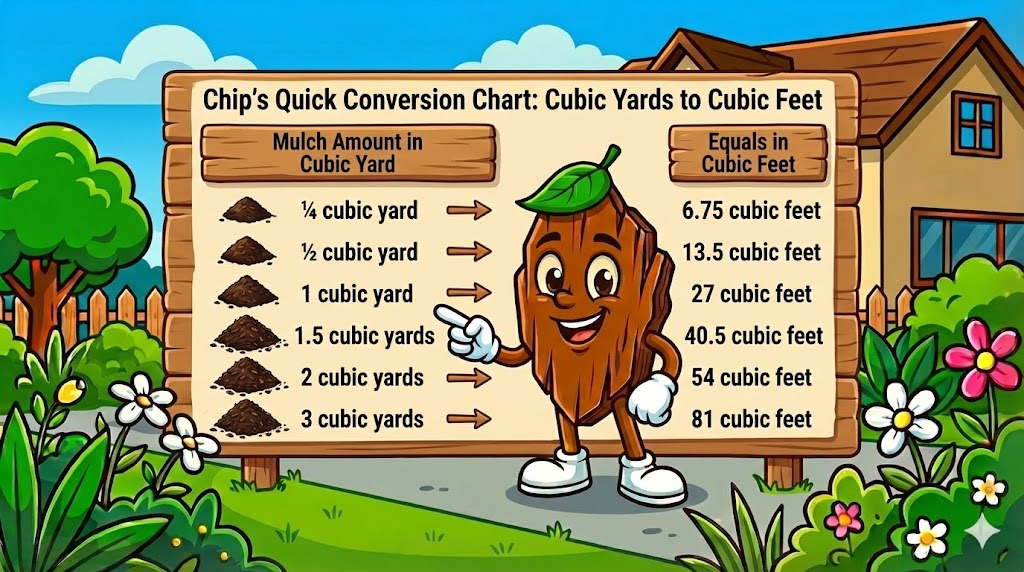
If you’re converting mulch from cubic yards to cubic feet, here are the most common amounts homeowners order. This makes it easy to estimate how much mulch you need without doing the math every time.
| Mulch Amount in Cubic Yard | Equals in Cubic Feet |
|---|---|
| ¼ cubic yard | 6.75 cubic feet |
| ½ cubic yard | 13.5 cubic feet |
| 1 cubic yard | 27 cubic feet |
| 1.5 cubic yards | 40.5 cubic feet |
| 2 cubic yards | 54 cubic feet |
| 3 cubic yards | 81 cubic feet |
If you’re buying bagged mulch but thinking in cubic yards (bulk), use this: 1 cubic yard = 27 cubic feet. So the number of bags you need depends on bag size (cubic feet per bag).
| Mulch Bag Size | Bags in 1 Cubic Yard | Cubic Feet Total |
|---|---|---|
| 1 cu ft | 27 bags | 27 cu ft |
| 2 cu ft | 13.5 bags (round up to 14) | 27 cu ft |
| 2.5 cu ft | 10.8 bags (round up to 11) | 27 cu ft |
| 3 cu ft | 9 bags | 27 cu ft |

Bags needed = 27 ÷ bag size (in cubic feet)
Examples:
If you have a yard amount other than 1 yard
Multiply first, then divide:
Bags needed = (yards × 27) ÷ bag size
Example: 1.5 yards using 2 cu ft bags (1.5 × 27) ÷ 2 = 40.5 ÷ 2 = 20.25 → buy 21 bags
If your result ends in a decimal, round up. Bagged mulch is hard to “split,” and mulch settles after spreading.

Measure the area you want to cover and choose your desired depth—2 to 3 inches is common for weed control and moisture retention. With those numbers, you can work out how many cubic yards to order.
Most calculators follow the same simple steps:
Online calculators remove guesswork and are especially helpful for irregular shapes. Our very own mulch calculator page can help teach you how to calculate cubic yards for mulch.
Here’s the simplest way to think about it:
1 cubic yard of mulch covers about:
So you can estimate like this:
Example (200 sq ft bed):
Quick tip: If you’re between numbers, round up a little. Mulch settles after you spread it.

If you’re in Pewaukee, Milwaukee, Southeast Wisconsin or our mulch service area and you’d rather not haul bags, you can order bulk mulch for delivery (or installation) from Best Bark Mulch! Choosing a local mulch supplier in your area, saves time and ensures mulch is placed and spread correctly for best results. We recommend finding a highly reviewed contractor or landscape company who has been in business for a few years, and has a portfolio of completed projects. Don't hesitate to ask them for past references of their customers!
Best Bark Mulch supplies high-quality bulk mulch and offers delivery and professional mulch installation across the region. Our team advises on the right product for your soil and plants, so you can receive the maximum benefits of mulch. After that our staff confirms the correct volume, and can handle the spread so your beds look great from day one.
Hiring pros gives you:
Working with a local crew like Best Bark Mulch often makes the whole process smoother and more reliable.
Mulch type influences both how much you need and how much it costs. Different materials have different densities, longevity, and price points—factor those in when choosing a product.
Common options include:
Density and particle size affect how much material you’ll use per area.
Price varies with:
Compare types and costs to match your budget and maintenance goals.
Costs depend on mulch type, total volume, and delivery distance. Installation adds labor, which varies by crew and job complexity.
Suppliers usually price mulch per cubic yard. For example, at $30 per cubic yard, 2 cubic yards of mulch would cost $60 for material. Delivery and mulch installation are additional and depend on distance and labor rates.
Good suppliers provide itemized quotes listing material, delivery, and labor. Ask for a clear breakdown up front so you can compare bids and avoid surprises.
1 cubic yard of mulch equals 27 cubic feet.
It depends on the bag size (in cubic feet):
Coverage depends on mulch depth:
For most beds, 2–3 inches is ideal. Avoid piling mulch directly against plant stems or tree trunks.
Divide cubic feet by 27. Example: 54 cubic feet ÷ 27 = 2 cubic yards.
Multiply cubic yards by 27.
Use this formula: Cubic yards = (Square feet × Depth in inches) ÷ 324 Example: 200 sq ft at 3 inches → (200 × 3) ÷ 324 = 1.85 cubic yards (round up to 2).
Bulk mulch is usually better for medium/large areas because it’s easier to spread and often costs less per cubic foot than bags. Bagged mulch can make sense for small touch-ups or tight access areas.
Most organic mulches are topped up about once per year to maintain the target depth. Full replacement is usually only needed if the mulch has broken down into fine material or is contaminated with weeds/mold.
Yes, if it’s still chunky and not fully decomposed. Rake or fluff it, remove weeds, and top-dress with a fresh layer to reach 2–3 inches total depth.
Some do, but many have minimum delivery requirements or a minimum delivery fee. If you only need 1 yard, pickup or combining orders can be the most cost-effective option.
Focus on durability, appearance, and your goal:
You can now rest easy, knowing 1 cubic yard of mulch equals 27 cubic feet, makes ordering much easier. Measure your beds, choose a mulch depth (typically 2–3 inches), and use the conversions above to estimate cubic yards or bag counts. If you want a quick estimate, use our mulch calculator—then decide whether you want to DIY or have Best Bark Mulch handle delivery or installation.