How Many Bags Are in a Yard of Mulch - Explained One cubic yard of mulch equals 27 cubic feet. That means 1 yard equals 27 bags of 1 cubic foot mulch, 18 bags of 1.5 cubic foot mulch, 14 bags of 2 cubic foot mulch, about 11 bags of 2.5 cubic foot mulch, or […]
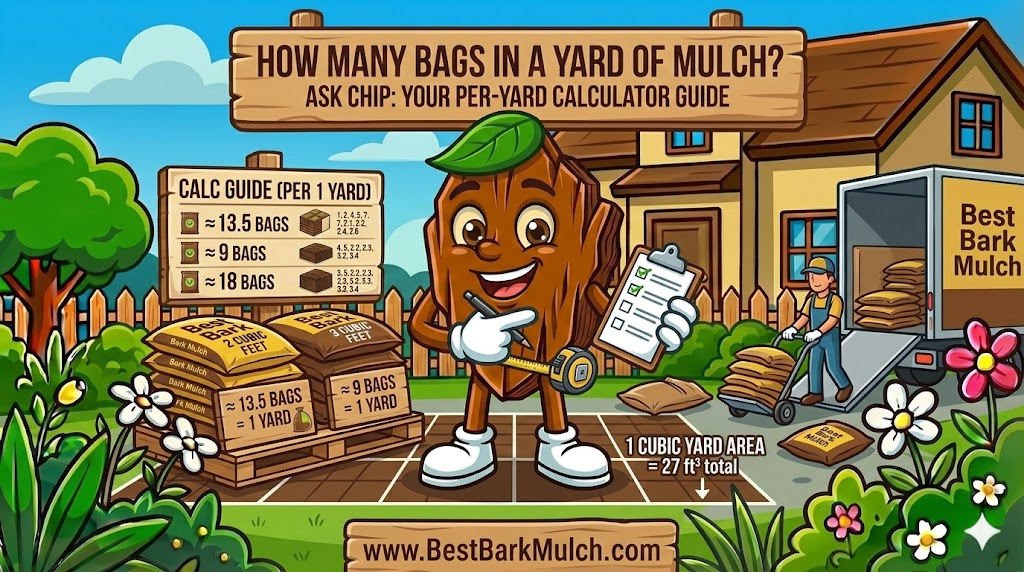
One cubic yard of mulch equals 27 cubic feet. That means 1 yard equals 27 bags of 1 cubic foot mulch, 18 bags of 1.5 cubic foot mulch, 14 bags of 2 cubic foot mulch, about 11 bags of 2.5 cubic foot mulch, or 9 bags of 3 cubic foot mulch. If you are buying bagged mulch, always round up to the next whole bag so you do not come up short once you start spreading.
If you want a faster way to estimate a full project, use our Mulch Calculator and go to the mulch bag converter, after you read the bag-to-yard conversions below.
A yard of mulch is the same as 27 cubic feet. Once you know the size of the bag, you divide 27 by that bag size.
For most homeowners, the most common mulch bag sizes are 1.5, 2, and 3 cubic feet. That is why people often search for how many 2 cu ft bags are in a yard of mulch. The exact answer is 13.5, but the real buying answer is 14.
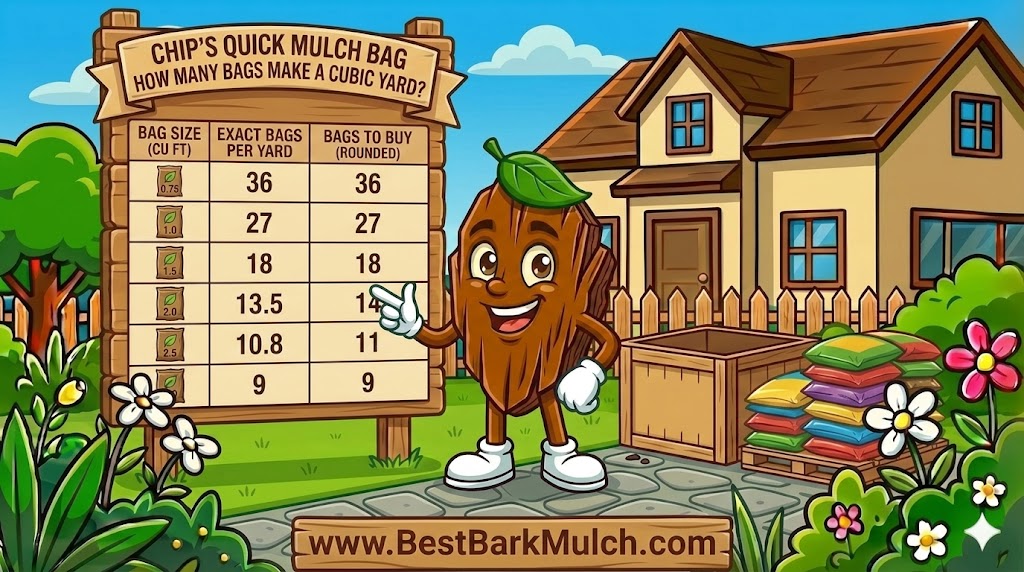
| Bag Size | Exact Bags Per Yard | Bags to Buy |
| 0.75 cu ft | 36 | 36 |
| 1.0 cu ft | 27 | 27 |
| 1.5 cu ft | 18 | 18 |
| 2.0 cu ft | 13.5 | 14 |
| 2.5 cu ft | 10.8 | 11 |
| 3.0 cu ft | 9 | 9 |
This is the number everything else comes back to.
A cubic yard is a volume measurement. In mulch terms, 1 cubic yard equals 27 cubic feet. If you are comparing bulk mulch sold by the yard with bagged mulch sold in cubic feet, this is the conversion that makes the math work.
There is no one bag count unless you know the bag size first.
A yard of mulch will always equal 27 cubic feet, but stores sell mulch in different bag sizes. Some carry 1.5 cubic foot bags, others stock 2 cubic foot bags, and some sell 3 cubic foot bags. The larger the bag, the fewer bags you need to equal 1 yard.

If you are using 1 cubic foot bags, you need 27 bags to equal 1 yard.
If you are using 1.5 cubic foot bags, you need 18 bags to equal 1 yard.
If you are using 2 cubic foot bags, the exact math is 13.5 bags per yard. In real life, that means you should buy 14 bags.
If you are using 2.5 cubic foot bags, the exact math is 10.8 bags per yard. Round up and buy 11 bags.
If you are using 3 cubic foot bags, you need 9 bags to equal 1 yard.
There are two formulas that matter.
If you just want to convert one yard into bag count:
Bags per yard = 27 ÷ bag size in cubic feet
If you want to estimate a real project:
Bags needed = (square feet × depth in inches ÷ 12) ÷ bag size
The first formula tells you how many bags make a yard. The second tells you how many bags you need for your beds based on square footage and depth.
Start by measuring the area you want to mulch in square feet. Then choose how deep you want the mulch.
For most homeowners, 2 to 3 inches is the most practical range.
If you spread mulch too thin, weeds show through faster and the bed can look patchy. If you spread it too thick, you waste product and can create problems around plants.
Always round up when buying bagged mulch.
Beds are not perfect rectangles. Mulch settles. Some gets left in the bag or lost while spreading. It is much easier to have a little left over than to stop halfway through and run back for one more bag.
At 2 inches deep, 1 yard of mulch covers about 162 square feet.
Here is the per-bag coverage at that depth:
| Bag Size | Coverage at 2 in |
| 1.5 cu ft | 9 sq ft |
| 2.0 cu ft | 12 sq ft |
| 2.5 cu ft | 15 sq ft |
| 3.0 cu ft | 18 sq ft |
At 3 inches deep, 1 yard of mulch covers about 108 square feet.
Here is the per-bag coverage at 3 inches:
| Bag Size | Coverage at 3 in |
| 1.5 cu ft | 6 sq ft |
| 2.0 cu ft | 8 sq ft |
| 2.5 cu ft | 10 sq ft |
| 3.0 cu ft | 12 sq ft |
This is where people often get tripped up. Bag count tells you volume. Coverage depends on how deep you spread that volume.
If you are covering 100 square feet at 2 inches deep, you need about 16.7 cubic feet of mulch.
That comes out to:
If you are covering 100 square feet at 3 inches deep, you need 25 cubic feet of mulch.
That comes out to:
If you are covering 250 square feet at 3 inches deep, you need 62.5 cubic feet of mulch.
That comes out to:
If you want to picture one bulk yard in bagged form, here is the cleanest comparison:
That is also the point where many homeowners start realizing bulk mulch may be the easier option.

Bagged mulch makes sense when:
For very small projects, bags are perfectly fine.
Bulk mulch usually makes more sense when:
Once the project gets bigger, bulk mulch is usually the more practical choice. If you are comparing the two, it helps to think in total volume first, then cost, then labor.
This is the biggest mistake. If you start with the wrong base number, the rest of the math will be wrong too.
Exact math matters, but buying math matters more. If the formula gives you 13.5 bags, you buy 14.
A project spread at 2 inches needs much less material than the same project spread at 3 inches. If you guess wrong on depth, your bag estimate will be off.
A bag count tells you how much product you are buying. Area coverage depends on how thin or thick you spread it.
A yard of mulch equals 13.5 bags of 2 cubic foot mulch, so the practical answer is 14 bags.
A yard of mulch equals 18 bags of 1.5 cubic foot mulch.
A yard of mulch equals 9 bags of 3 cubic foot mulch.
It depends on your depth and bag size. At 2 inches deep, 100 square feet needs about 16.7 cubic feet of mulch. At 3 inches deep, it needs 25 cubic feet. Divide that number by your bag size, then round up.
At 3 inches deep, 250 square feet needs 62.5 cubic feet of mulch. If you are buying 2 cubic foot bags, that works out to 31.25 bags, so you should buy 32.
At 2 inches deep, 1 yard of mulch covers about 162 square feet. At 3 inches deep, it covers about 108 square feet.
For small touch-up jobs, bags can make sense. For larger projects, bulk mulch is usually a better value and much less work.
Yes. In most cases, rounding up is the smart move. It is better to finish the job with a little left over than come up short in the middle of it.
If you only remember one thing from this article, remember this: 1 cubic yard of mulch equals 27 cubic feet.
From there, the process is simple. Divide 27 by your bag size to see how many bags make a yard. If you are calculating a real project, start with square footage, choose a realistic depth, divide by your bag size, and round up.
If you want to double-check your numbers before ordering, use our Mulch Calculator Guide to estimate the total amount you need with a little more confidence.





