Unlock the hidden benefits of mulching for your garden. Learn how mulching can conserve moisture, suppress weeds, and enrich soil health effectively.
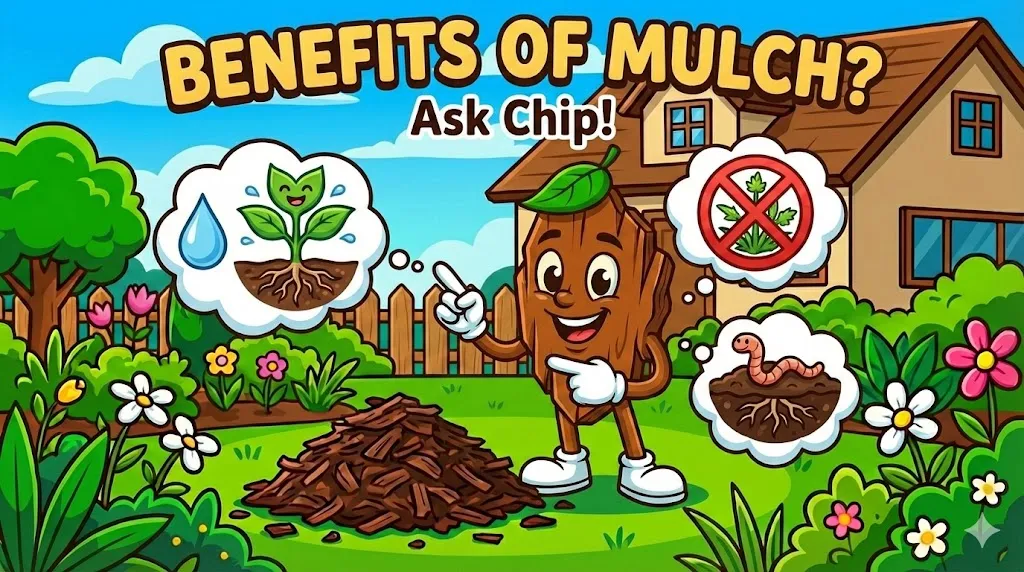
Mulch is one of the simplest, most effective tools for healthier gardens and smarter landscaping. Whether organic or inorganic, a layer of mulch helps moderate soil temperature, lock in moisture, and cut down on weeds. Below you'll find practical benefits of mulch—how it improves soil life, saves water, and lifts curb appeal—plus guidance on types of mulch and when professional delivery or installation makes sense. If soil erosion, drying soil, or persistent weeds are slowing your garden, mulch offers a straightforward, proven fix.
Benefits of Mulch include soil and plant health in a few clear ways: it protects soil structure, slowly releases nutrients (for organic options), and supports beneficial microbes. Properly applied mulch shields the ground from temperature swings and erosion, and as organic mulches break down they feed the soil. That decomposition helps build a richer, more resilient soil ecosystem that supports stronger plant growth.
Organic mulches—like bark, wood chips, or straw—add organic matter as they decompose, which improves fertility and soil texture. They also hold moisture near root zones, an important advantage during dry spells. Beyond nutrients and moisture, organic mulches create habitat for helpful insects and soil microbes, encouraging a balanced, biodiverse garden environment.
Research has clarified how different organic mulches affect the microbial life that drives soil health.
Organic mulches and soil microbial activity
A study examined how several organic mulches changed soil dehydrogenase activity (DHA) and bacterial community structure in the top 1 cm and 5 cm of soil one year after application. Results showed the long-term effects depend on mulch type and are strongest in the top few centimeters of the soil profile, indicating that mulch choice matters for surface microbial activity.
Effect of organic mulches on soil bacterial communities one year after application, RS Dungan, 2003
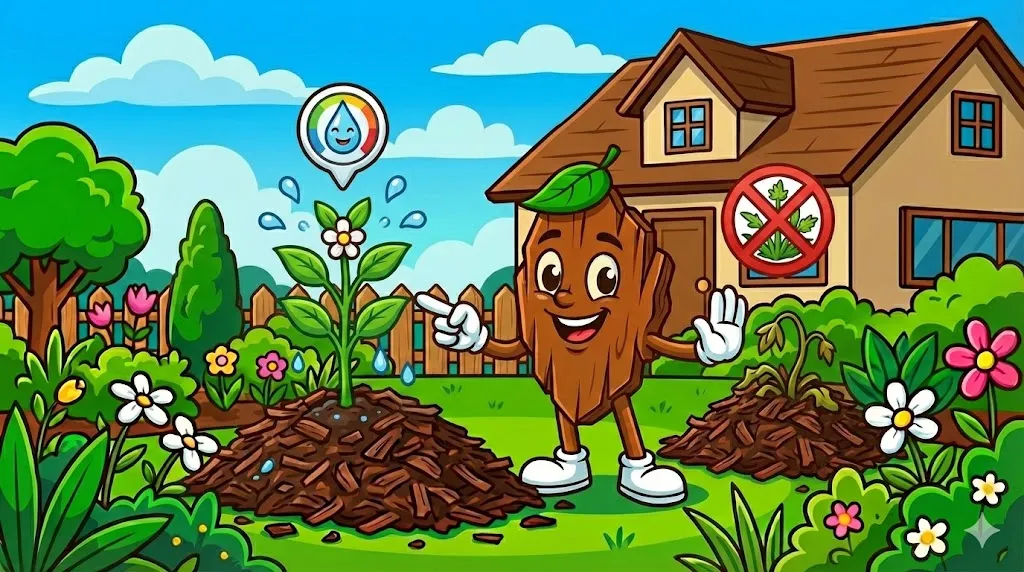
Mulch plays a key role in moisture retention and weed suppression. By shading the soil surface, mulch reduces evaporation and helps keep moisture levels steady—studies report reductions in soil moisture loss of roughly 30–50% in mulched beds. Mulch also blocks sunlight from reaching weed seeds, preventing many from germinating. Together, these effects make mulch an efficient way to conserve water and reduce weeding time.
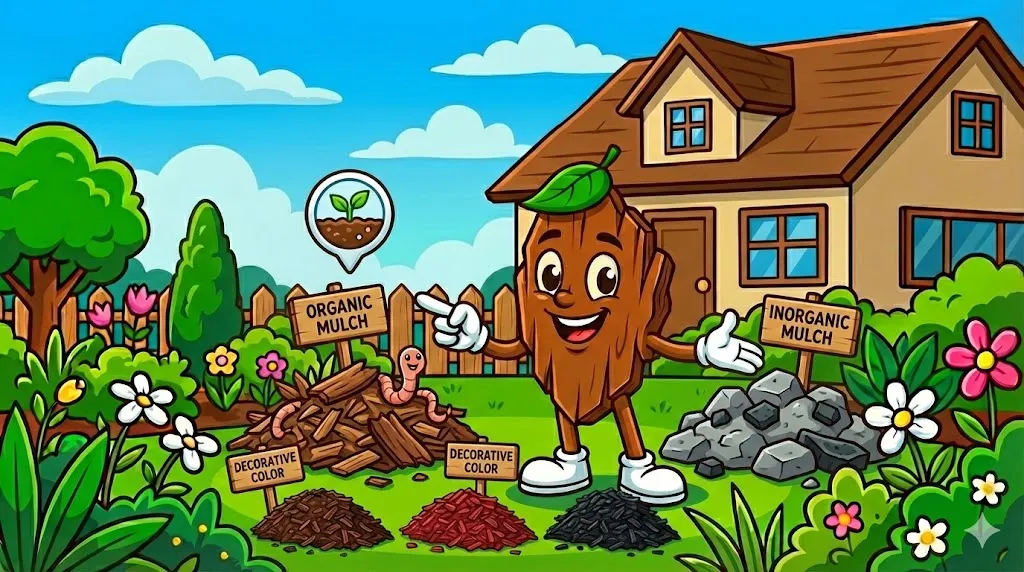
Mulches come in many forms, each with distinct benefits. Knowing the differences helps you pick the right material for your goals—whether that’s soil building, low maintenance, or decorative effect.
Organic mulches (wood chips, straw, compost) improve soil fertility over time as they break down. Inorganic mulches (rubber, gravel, landscape fabric) offer long-lasting coverage and low maintenance but don’t add nutrients. If your priority is soil health, organic is usually best; if you want a durable, low-upkeep surface, inorganic options can be ideal. Match the type to your plants and landscape needs.
Decorative mulches—like colored hardwood or decorative stone—add texture and color while still providing the practical benefits of mulch. They let homeowners coordinate beds with plantings and hardscapes for stronger curb appeal. Decorative choices can give a neat, finished look without sacrificing the moisture and weed-control advantages of a mulch layer.

In Southeastern Wisconsin, professional mulch delivery and installation save time and ensure proper placement. Services deliver quality mulch to your site and can install it to the right depth and coverage so you get the full benefits without the heavy lifting.
Local delivery services in Milwaukee and Waukesha make projects easier by handling transport and logistics. They also provide access to a wider selection of mulch types and local know-how on what works best in our climate and soil. That convenience can free up your time while improving results.
Professional mulch installers know how deep to lay mulch, how to avoid piling it against stems, and how to distribute it evenly—small details that affect performance. Pros reduce the chance of common DIY mistakes like uneven coverage or compacted layers, helping you get consistent moisture retention, weed control, and a cleaner look.

Budgeting for mulch installation means accounting for material type, calculating the area size, and installation complexity. Those variables determine total cost and help you weigh DIY vs. professional service.
In Milwaukee and Waukesha, mulch materials generally run about $30 to $60 per cubic yard. Installation is commonly priced between $0.50 and $1.50 per square foot, depending on site conditions and project scope. These ranges let you estimate costs while choosing materials and services that fit your plan.
Delivery costs vary with distance, order size, and any extra service fees. Sites farther from supply yards may see higher transport charges, while larger orders can reduce the per-unit price. Asking about bulk pricing, drop-off options, and staging can help control delivery expenses.
Mulch supports sustainable landscaping by conserving water, reducing erosion, and improving soil health. It also creates habitats that support garden biodiversity, making landscapes more resilient and environmentally friendly.
By cutting evaporation, mulch conserves water—an important benefit in dry spells. Organic mulches also add carbon to the soil as they decompose, contributing to soil carbon storage and offering a small but meaningful climate benefit over time. These combined effects make mulch an eco-smart choice for many landscapes.
Mulch reduces the need for chemical weed controls and can lower fertilizer requirements by improving soil health. Using locally sourced mulch further reduces transportation emissions, making your landscaping choices more sustainable from supply to soil.
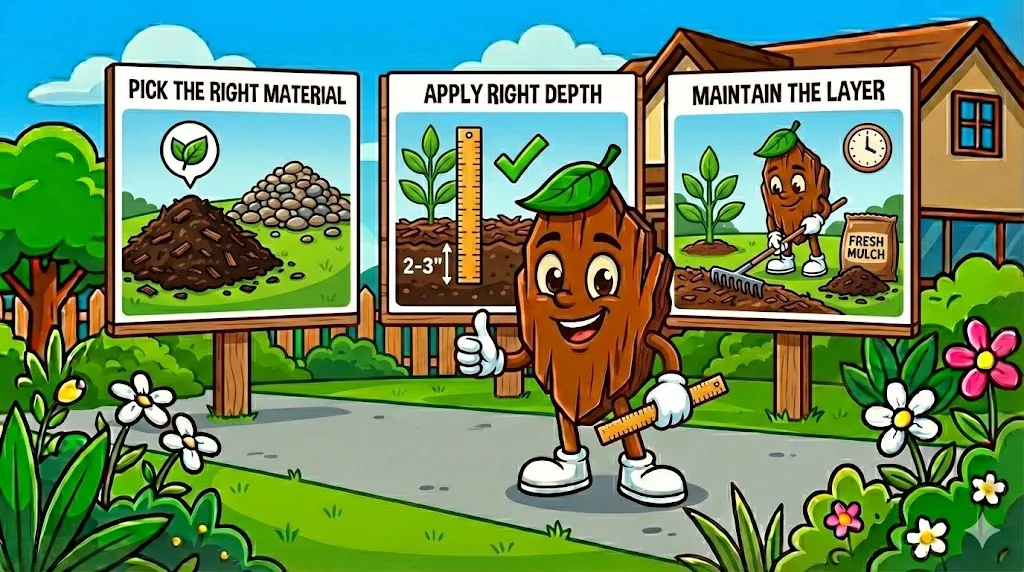
Follow a few simple practices to maximize mulch benefits: pick the right material, apply the right depth, and maintain the layer over time. Thoughtful selection and upkeep extend mulch performance and protect plant health.
Choose mulch based on plant needs and landscape goals, and apply it 2–4 inches deep, keeping it pulled slightly away from stems and trunks to prevent rot. Spread mulch evenly and avoid compacting it; this helps roots breathe while preserving moisture and blocking weeds.
Check mulch annually for compaction or breakdown and refresh as needed. Replenishing organic mulch every 1–3 years keeps its appearance and function, while inspecting for pests or disease helps you catch problems early. Regular care ensures mulch continues to protect soil and plants.
Spring and fall are the best seasons to apply mulch. Spring applications help retain moisture and suppress weeds as plants start growing; fall applications protect soil from freeze-thaw cycles and winter erosion. Avoid mulching when soil is completely dry—moist soil helps mulch settle and work effectively.
Mulch can attract pests if piled too thick or placed against building foundations or plant stems. Likewise, mulch touching stems can create excess moisture that encourages fungal issues. To reduce risk, keep mulch a few inches away from stems and structures, use appropriate mulch types, and monitor for pest activity.
Replenish mulch every 1 to 3 years depending on material and conditions. Organic mulches break down faster and typically need more frequent topping up, while inorganic options last longer but may still need refreshing for appearance or function.
Colored mulches are often dyed or recycled and are chosen mainly for visual effect; they still provide moisture and weed control but may have dye-related concerns over time. Natural mulches, like wood chips or straw, gradually add nutrients as they decompose and generally better support soil biology.
Yes—mulch works well in vegetable gardens to conserve moisture, suppress weeds, and stabilize soil temperature. Organic choices like straw or grass clippings are popular because they add organic matter as they break down. Take care to choose clean materials and apply them so air and water still reach the soil.
Mulch conserves water, reduces erosion, and improves soil health by adding organic matter and supporting biodiversity. Choosing local sources and appropriate materials lowers transport emissions and supports sustainable landscaping practices overall.
Mulch is a practical, low-effort way to boost soil health, retain moisture, and tidy up your landscape. By selecting the right type and applying it correctly, you protect plants, reduce maintenance, and support a more sustainable yard. Explore available mulch delivery options from us and professional services to find the best fit for your property—and start improving your outdoor space today.
Learn more at https://bestbarkmulch.com